We live in an age where opinions travel faster than understanding. Somewhere along the way, we began mistaking volume for impact and distance for safety. The result is a culture fluent in declaration but increasingly bankrupt in dialogue. Everyone is speaking, few are listening, and almost no one feels heard. If we want a future that actually works, not just one that sounds good online, we must return to something radically simple: one on one conversations with people who disagree with us, sometimes sharply.
The first principle of a meaningful conversation is destination. Every conversation has one, whether we admit it or not. Too often, the unspoken destination is domination. We want to win, to expose flaws, to silence the other side. But when the destination shifts from being right to arriving somewhere better together, the entire conversation changes shape. The goal becomes understanding rather than agreement. Progress rather than performance. When we know where we are trying to go, we stop treating the other person as an obstacle and start seeing them as a fellow traveler.
The second principle is peace, though not the fragile kind that avoids tension. This is a resilient peace that can sit inside discomfort without collapsing. Peace in conversation means regulating ourselves before attempting to correct others. It is the discipline of listening without mentally rehearsing a rebuttal. In my experience, this kind of peace does more to dissolve polarization than the most eloquent argument ever could. It refuses to mirror aggression and creates space where complexity can breathe. People become honest when they feel safe, not when they feel cornered.
The final principle is reclaiming respect. Somewhere along the line, respect became conditional on agreement, and that has been a costly mistake. You do not earn respect by thinking like me. You earn it by showing up as a human being. One on one conversations restore respect by rehumanizing people we have reduced to labels, tweets, and stereotypes.
When you look someone in the eye, caricatures collapse.
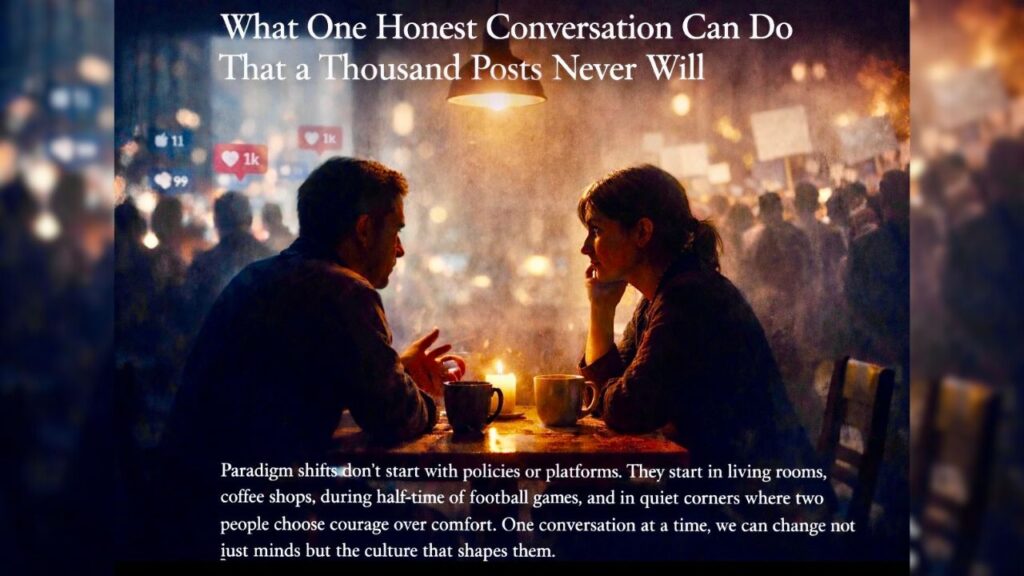
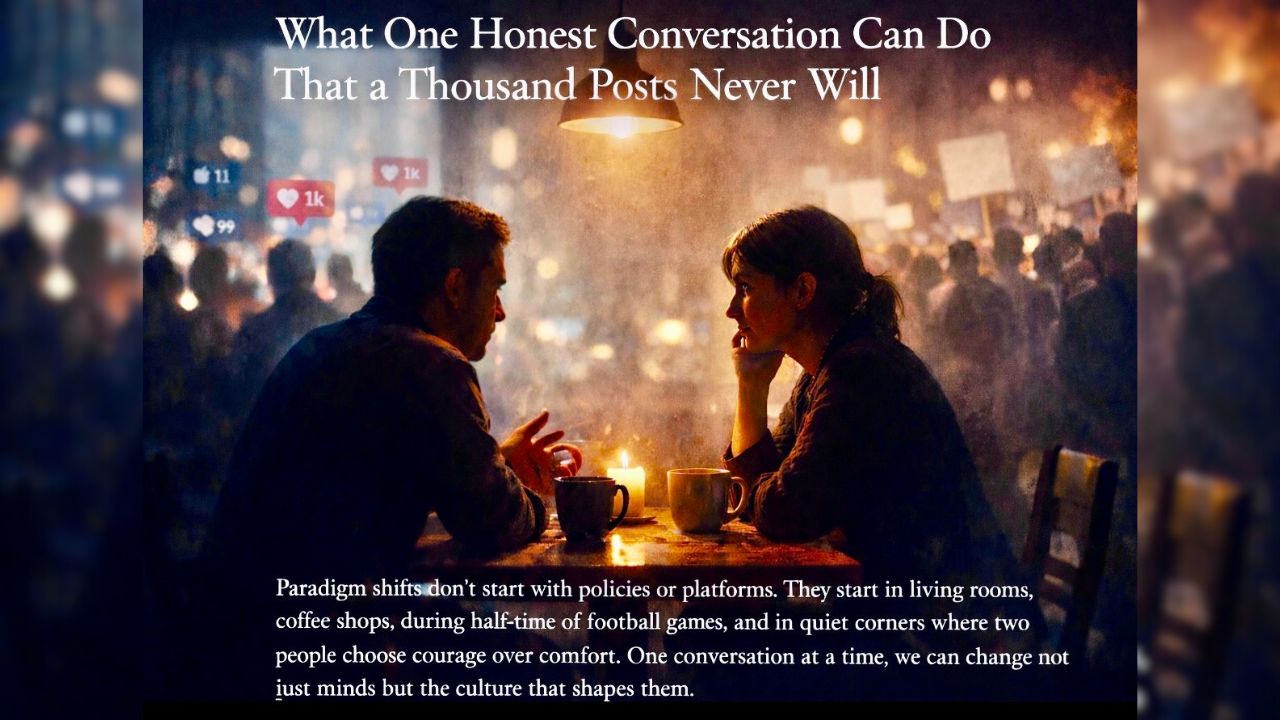
Paradigm shifts do not start with policies or platforms. They start in living rooms, coffee shops, during halftime of football games, and in quiet corners where two people choose courage over comfort. One honest conversation at a time, we can change not just individual minds but the culture that shapes them.