This image was generated by artificial intelligence.
Here’s something that doesn’t get talked about enough: the way news gets reported can either calm a conflict down or pour gasoline on it. The framing, the sources, what gets left out, all of it shapes how people understand disputes, crises, and global events and that understanding drives real world outcomes.This is why media literacy isn’t just about spotting fake news.
It’s a conflict resolution skill
The problem with “good guys vs. bad guys” News coverage loves a clean narrative. One side is defending itself; the other is the aggressor. One group represents order; the other is chaos. Real conflicts are messier than that, and when reporting flattens them into binary struggles, it closes off space for dialogue. Suddenly negotiation looks like weakness, and force looks like the only option.
Whose voices are missing?
Pay attention to who actually gets quoted in news stories and featured on the front page. Often, it’s officials, experts, spokespeople or celebrities whose award wins get overshadowed by their political statements.This isn’t just an oversight. It shapes which perspectives seem legitimate and makes it harder to understand what’s actually driving conflicts.
Sensationalism isn’t neutral
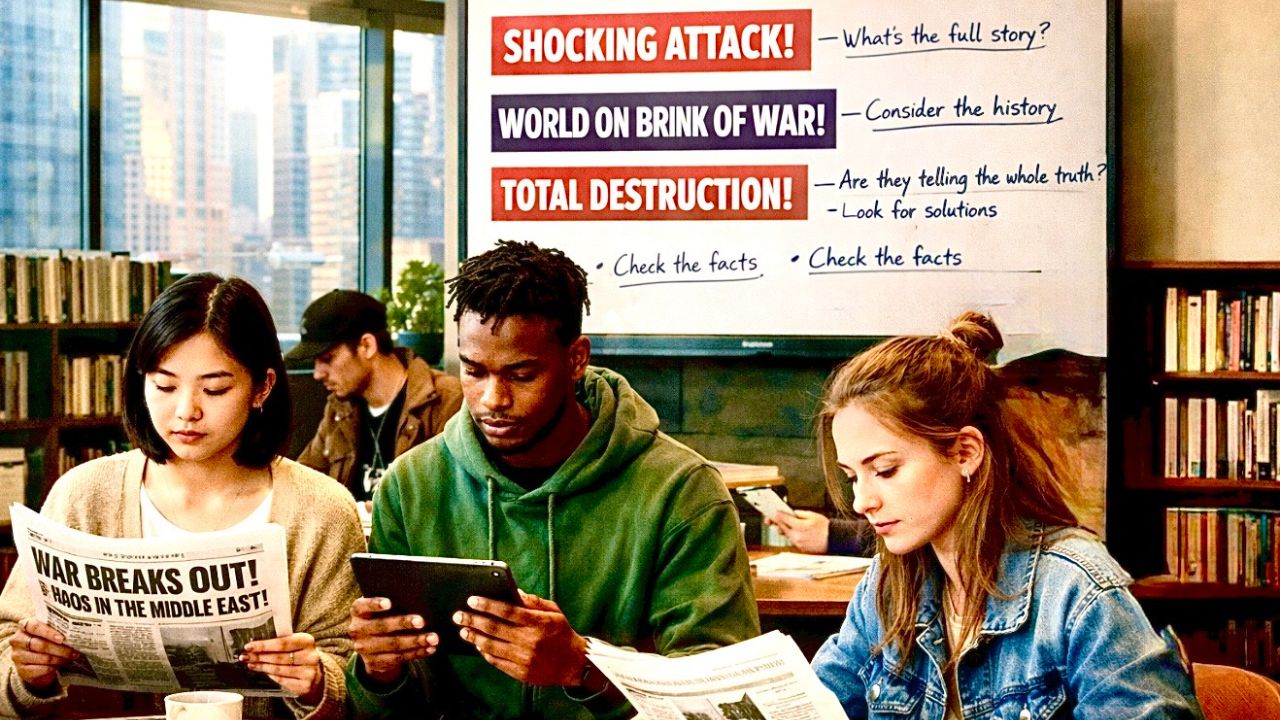
Dramatic headlines aren’t just annoying, they actively make things worse. They can trigger defensive reactions instead of critical thinking. They can harden identities. That’s the opposite of what conflict resolution requires.
So what do you do with this?
Read with intention. When you’re consuming news, ask yourself: Who’s speaking here? Who isn’t? What’s the author’s background and what outlet are they writing for? What history or context is missing? Is this framing designed to inform or to activate?
The bigger picture
At Destination Peace, we talk a lot about resolving conflicts, but the work starts before things blow up. It starts with the stories we tell about each other, and whether those stories leave room for understanding.
Media literacy is part of that. It’s about getting the fullest picture possible before forming an opinion and recognizing when you’re only seeing part of the story.