Cape Coast & Asebu, Ghana
Some journeys are planned. Others are called into being. Our visit to Ghana’s Central Region was both a carefully arranged trip to explore how our peace initiative, Destination Peace, might serve the communities of Asebu, Accra and Cape Coast, and a spiritual pilgrimage that unfolded in ways we could never have anticipated.
The invitation came through our dear friend Twyla Garrett, a remarkable entrepreneur and visionary whom I first met several years ago at a conference where I spoke at UC San Diego. Our friendship had deepened over the years, and when she told me about her development work in Ghana, her partnership with Chief Nana Obokese Ampah and the transformative projects taking shape in Ghana, I knew I had to see it for myself.
Meeting the Chief
Chief Nana Obokese Ampah, the Apagyahen of the Asebu Traditional Area, carries himself with the dignity of his ancestral title and the warmth of a man deeply committed to his people’s future. His name itself speaks to the sacred history of this land: “Obokese” refers to the ancient stone upon which the legendary founder of the Asebu Kingdom, Asebu Amanfi, once sat to address his people. The stone still exists, bearing what locals believe are the fingerprints of the great warrior king himself.
The Chief’s vision is both ambitious and rooted: to reconnect the African diaspora with their ancestral homeland through meaningful development, not charity, but partnership. The Asebu Pan African Village Project, the Obokese University of Excellence, the Obokese Foundation, these are not mere projects but acts of restoration, healing the wounds of history by building bridges of opportunity.
Twyla’s Vision Made Manifest
Twyla took me to see the land where her hotel will rise, a site that will one day welcome travelers from around the world to experience Ghana’s beauty and history. Standing on that about to be developed earth under the African sun, I felt moved to offer what I had: my voice. I sang a prayer over the land, blessing what would be built there, asking that it serve not just commerce but community, not just visitors but the people of this place.
We also visited the areas where Twyla is building infrastructure for the welfare of the local community. This is what distinguishes her work and the Chief’s from mere development. Every project considers how it will lift the people who already call this land home. It is diaspora investment with a conscience, capitalism with a soul.
The Door of No Return
No visit to Ghana’s Central Region is complete without confronting its history. We traveled to Elmina Castle, that imposing white fortress that has stood since 1482, the oldest European building in sub-Saharan Africa. Beautiful from the outside. A horror within.
The dungeons are dark and close. The air is heavy. Even now, centuries later, you can feel the weight of what happened here, the thousands upon thousands of human beings held in these spaces before being forced through the Door of No Return, onto ships bound for a fate unimaginable. We stood in those chambers and let the silence speak. Some places require no commentary. They demand only witness.
And yet Ghana has transformed this trauma into something powerful. The Door of No Return has become, for diaspora visitors, the Door of Return. What was meant to sever has become a bridge. What was stolen is being reclaimed not through erasure of history, but through its full acknowledgment.
When the Music Called
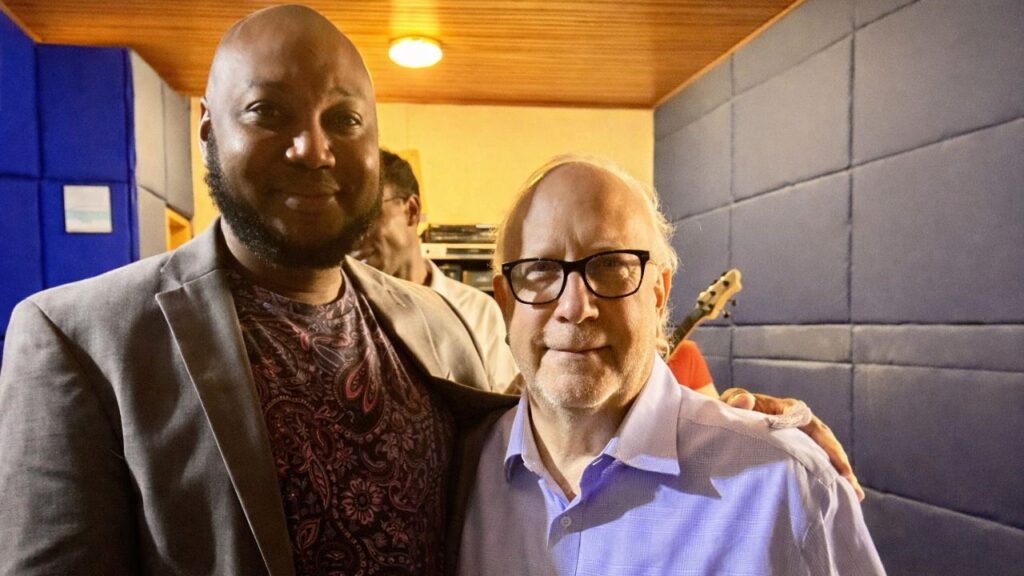
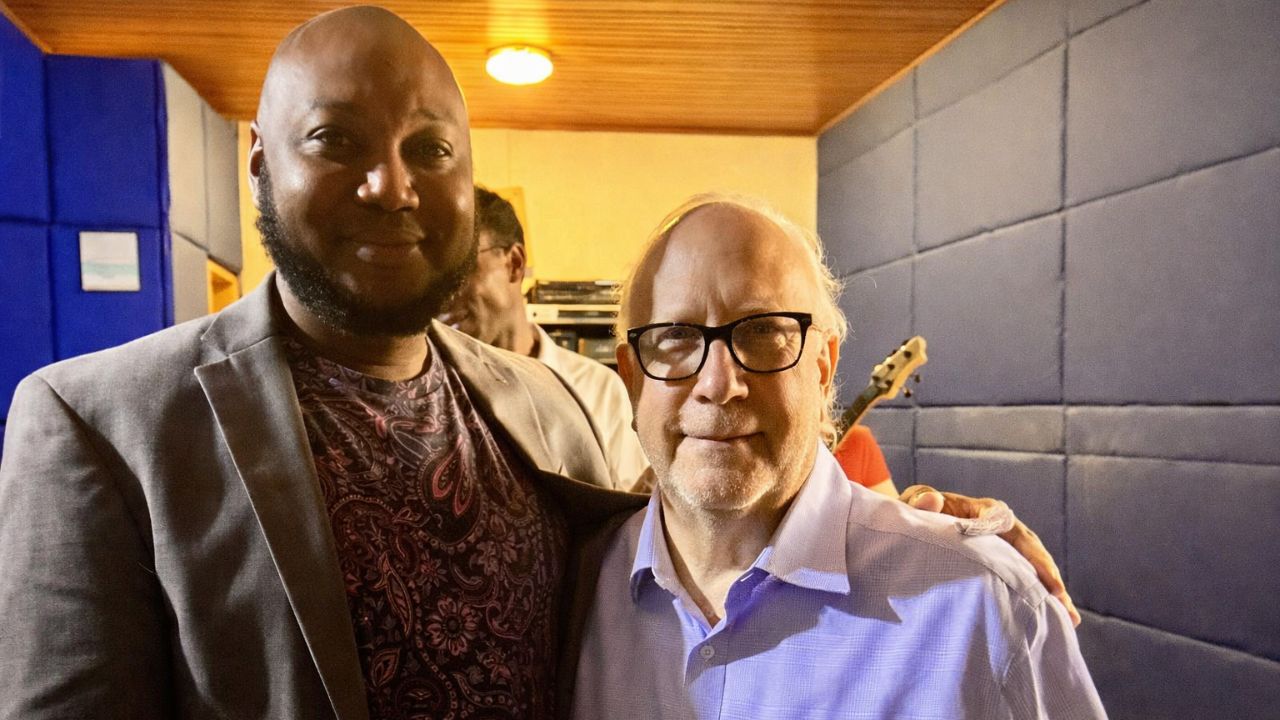
The day before we departed, I found myself at a rehearsal for the Apayamkese Festival, the annual celebration honoring the chiefs and heritage of the Asebu Traditional Area. The event would take place the day after our departure, a grand gathering of traditional leaders from across the region but that evening, a jazz band was fortuitously rehearsing for the festivities.
Something stirred in me. The music was too good, the moment too sacred to simply observe. I had to sing. They welcomed me.
What came out was not a prepared song but something extemporaneous, words and melody flowing together about Ghana, about the power of music to heal and unite, about jazz as a language that speaks across all borders. I sang about God being present in this place, in this moment, in the gathering of strangers who were becoming united as one. The band followed where the spirit led, their instruments weaving around my voice as if we had rehearsed for years.
It was Destination Peace in its purest form not a program or initiative, but a moment of genuine connection, music bridging cultures and hearts, peace made audible.
What Remains
We left Ghana the next morning, missing the grand festival by mere hours. But we carried with us something more valuable than any ceremony could have provided: the lived experience of community, of sacred purpose, of song offered freely and received with joy.
Chief Nana Obokese Ampah and Twyla Garrett are doing monumental work in the Asebu Traditional Area. They are building hotels and houses, yes but more than that, they are building hope. They are creating spaces where the scattered children of Africa can return, not as tourists but as family. They are proving that development can serve dignity, that investment can carry love.
For one unforgettable evening… I had the high honor and blessing to add my voice to their magnificent song.
— ✦ —
Destination Peace
Bringing harmony through presence, music, and shared humanity